Sicily, a destination for A-listers, from Dua Lipa to Admiral Lord Nelson
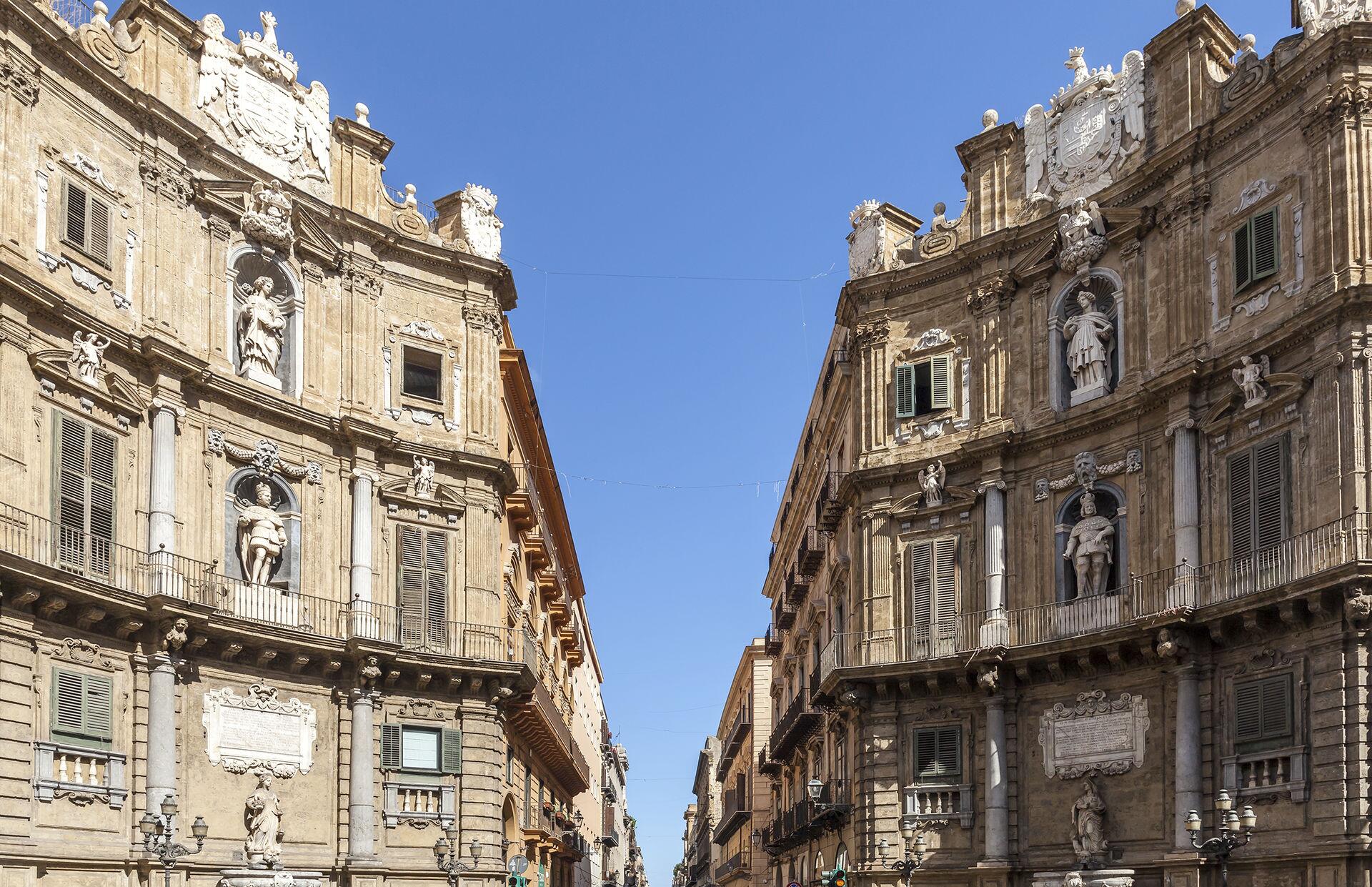
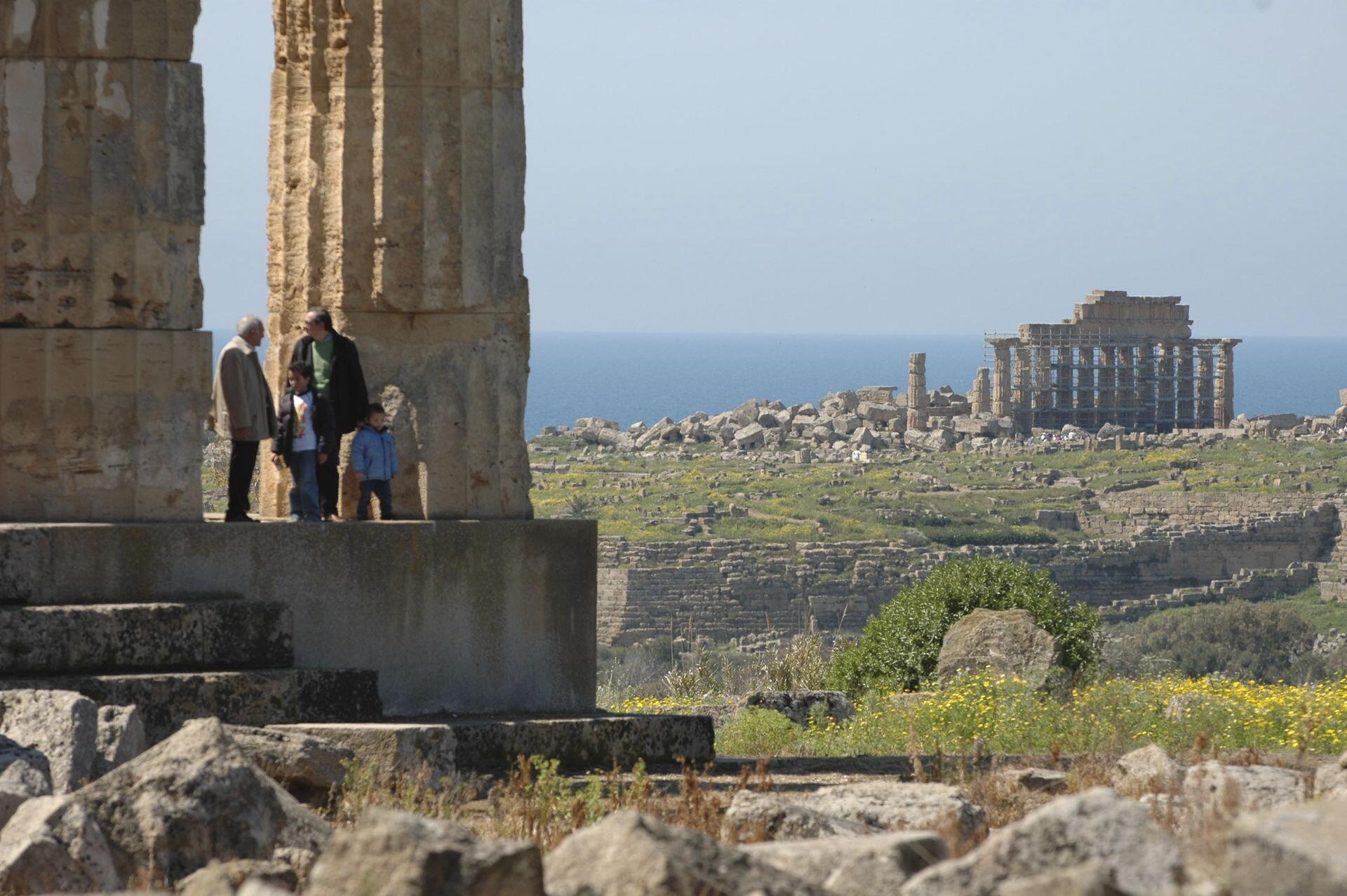
Google like to take over Selinunte for their annual Camp.
The 21st Century - weddings and billionaires
Tying the knot
Like the Lipa-Turners, many famous faces have chosen to get married in Sicily over the last couple of decades. These include Charlie XCX, the actress Jaime Winstone (Ray's daughter), Thom Yorke of Radiohead, the ballerina Patricia Zhou, and Fuchsia Kate Sumner (Sting's daughter).
Living the dream
Others have visited and decided to buy property so that they can spend several months a year basking in Sicily's charisma. In 2021, for example, Mick Jagger added to his real estate portfolio by purchasing a seafront pile in Porto Palo di Capo Passero at the island's southeasternmost point.
The tech bros and Hollywood
Google has hosted several of its annual Camps in Sicily, based in and around the archaeological site of Selinunte and Sciacca in the southwest. Attendees over the years have included Elon Musk, Bill Gates, Mark Zuckerberg, Larry Page, Sergey Brin, Margot Robbie, Leonardo DiCaprio, Tom Hanks, Harry Styles, Orlando Bloom, Priyanka Chopra, Tom Cruise, Barrack Obama, and Alicia Keys (amongst many others).
Molto fashion
Dolce & Gabbana (Domenico Dolce is a Sicilian by birth) have held several fashion events in Sicily, including four of their Alta Moda extravaganzas: in Syracuse and Marzamemi (2022), the Valley of the Temples, Agrigento (2019), Palermo (2017), and Taormina (2012). With them arrived stars such as Helen Mirren, Monica Bellucci and Sofia Vergara, to name but a few.
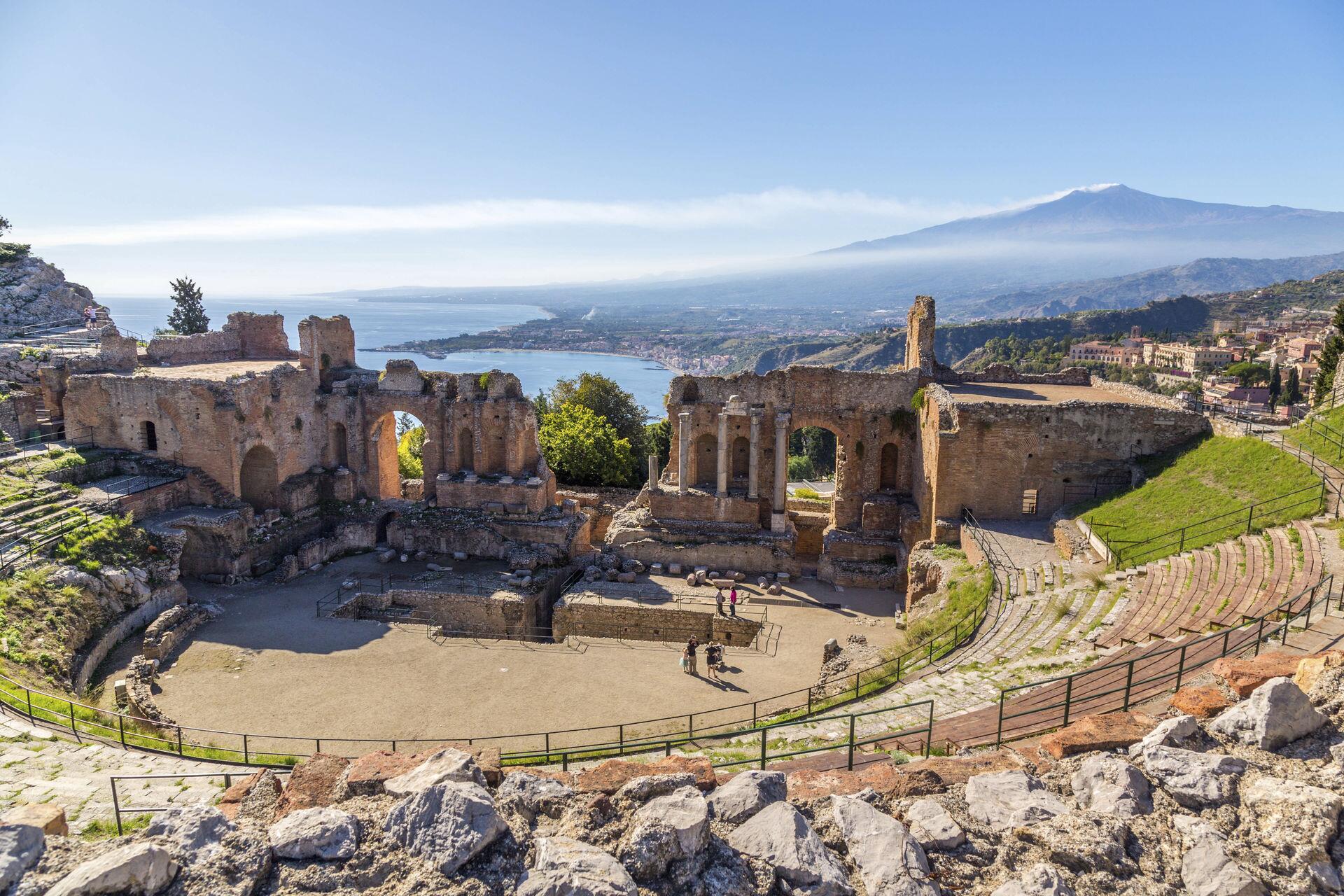
Taormina's charms have proved irresistible to VIPs for centuries.
The 20th Century - Hollywood stars, glamour and scandals
The allure of the Pearl of the Mediterranean
What do D.H. Lawrence, Oscar Wilde, Tennessee Williams, Marlene Dietrich, Greta Garbo, John Steinbeck, Truman Capote, Vladimir Nabokov, Federico Fellini, Cary Grant, Gregory Peck, Audrey Hepburn, Marilyn Monroe, Elisabeth Taylor and Richard Burton, Francis Ford Coppola, Leonard Bernstein, and Woody Allen have in common? They've all spent time in Taormina.
Some were there working (Woody Allen filmed parts of Mighty Aphrodite in the theatre there, for example), many were attending the Taormina Film Fest.
Others stayed for longer: DH Lawrence and Truman Capote lived and worked there for several years (in the same house though some three decades apart); Greta Garbo (under the alias Harriet Brown) spent most springs there between 1950 and 1979.
A sojourn in Syracuse
Moving on to another of Sicily's gorgeous towns, in the mid-1950s, Winston Churchill spent the summer in Syracuse. While there he painted and worked on his great masterpiece, The History of the English-Speaking Peoples.
Volcanic passion
One of the most scandalous affairs in the history of cinema took place in the Aeolian Islands in 1949, while Roberto Rossellini and Ingmar Bergman were making Stromboli (Terra di Dio). Although both were married, they fell in love and Bergman fell pregnant. She gave birth to their first child, Robin, some nine months after filming had begun. Two years later the couple had twins, Isotta Ingrid Rossellini and Isabella Rossellini, the actress.
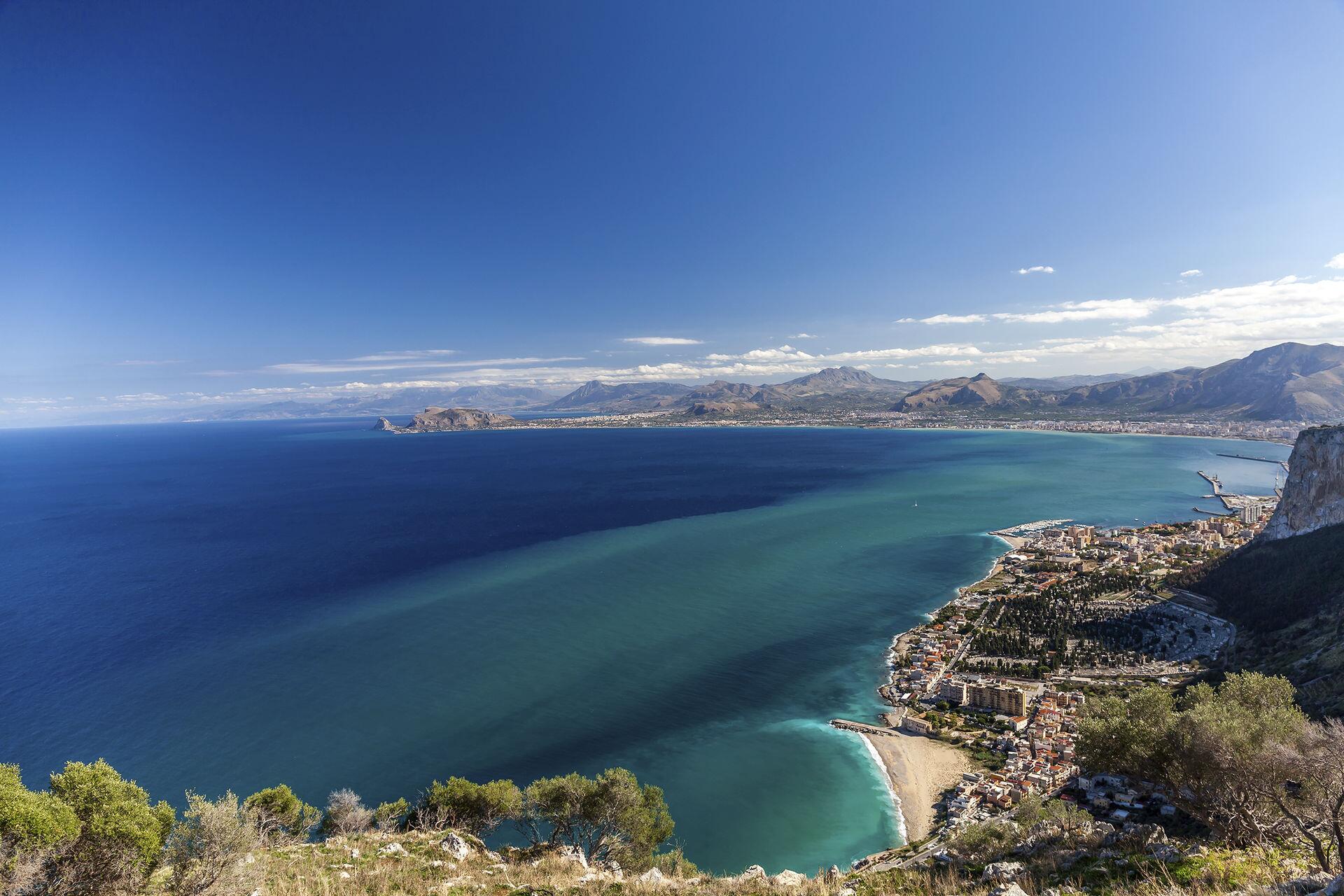
The Bay of Palermo seen from Montepellegrino, a view Richard Wagner would have been familiar with.
The 19th century - Sicily on the world map
Sicily joins the Grand Tour
In the 1800s, Sicily, and particularly Taormina, became part of the Grand Tour. Numerous notable writers, composers and artists visited the island as a result.
Inspiration for writers and composers
In the mid-1830s, Alexander Dumas arrived from Naples aboard a sailing boat and voyaged around Sicily's coast, stopping off to visit the ancient Greek sites, Mount Etna and other places. He recorded his travels in a book, Le Speronare, named after the vessel he travelled on.
The 1880s saw a stream of eminent visitors, including: Brahms (Taormina); Guy de Maupassant (the Valley of the Temples and Taormina, whose views he described as, "a picture in which one finds everything that seems made to seduce the eyes"); and Friedrich Nietzsche, whose stay inspired a volume of poetry entitled Idylls of Messina.
Perhaps most famously of all, Richard Wagner arrived in Palermo in November 1881. He remained until March the next year, completing his last great opera, Parsifal, in between excursions around the city. He moved on to Acireale on the east coast before finally leaving Sicily in April 1882.
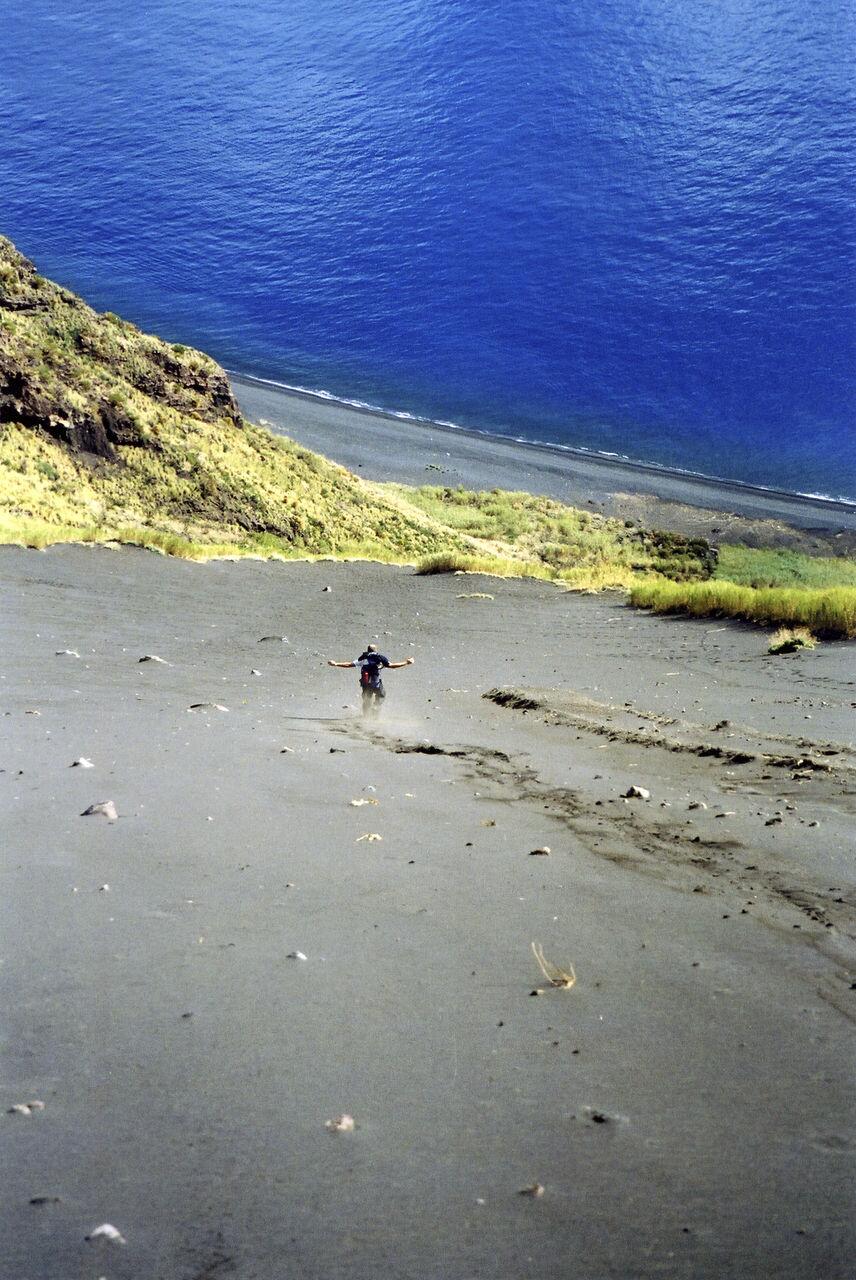
Stromboli exerted a strong pull for the painter Jean-Pierre Houël.
The 18th Century - a German, a Frenchman and an Englishman
The key to everything
"To have seen Italy without having seen Sicily is not to have seen Italy at all, for Sicily is the key to everything”.
If one man was responsible for Sicily's inclusion in the Grand Tour, it was Johann Wolfgang von Goethe, who travelled around the island in 1787.
His travelogue, Italian Journey, published in 1817, includes evocations of Sicily's ravishing natural beauty: "The purity of the sky, the tang of the sea air, the haze which, as it were, dissolved mountains, sky and sea into one element - all these were food for my thoughts."
Sicily enters royal salons and galleries around the world
Another man responsible for putting Sicily on the international map was the French painter Jean-Pierre Houël, who spent three years (1776–1779) travelling around Sicily and the Aeolian Islands.
His evocative paintings of Mount Etna, Stromboli, Syracuse, the Valley of the Temples, and Segesta were snapped up by King Louis XVI of France, the Empress of Russia, Catherine the Great, and many others.
Today, his depictions of Sicily grace the walls of the Hermitage, the Louvre, the J Paul Getty Museum, and the National Gallery of Art in Washington.
Nelson in love
Sicily's ability to fan the flames of love is perhaps best exemplified by the infamous, society-shaking affair between Admiral Lord Nelson and Lady Hamilton.
The great naval hero had rescued the King of the Two Sicilies, Ferdinand IV, from the advance of Napoleon's troops by whisking him from Naples to Palermo. Members of the Neapolitan court on Nelson's flagship included the British ambassador, Sir William Hamilton and his wife Emma.
It was during this voyage that the affair between Nelson and Lady Hamilton began in earnest, and it would blossom still further during their stay in Sicily's capital.
Ferdinand IV showed his gratitude to Nelson by bestowing on him the Duchy of Bronte, complete with the historic Castello di Maniace (also known as Castello Nelson) on the western flanks of Mount Etna. Unfortunately, Nelson never made it to his Sicilian fiefdom.
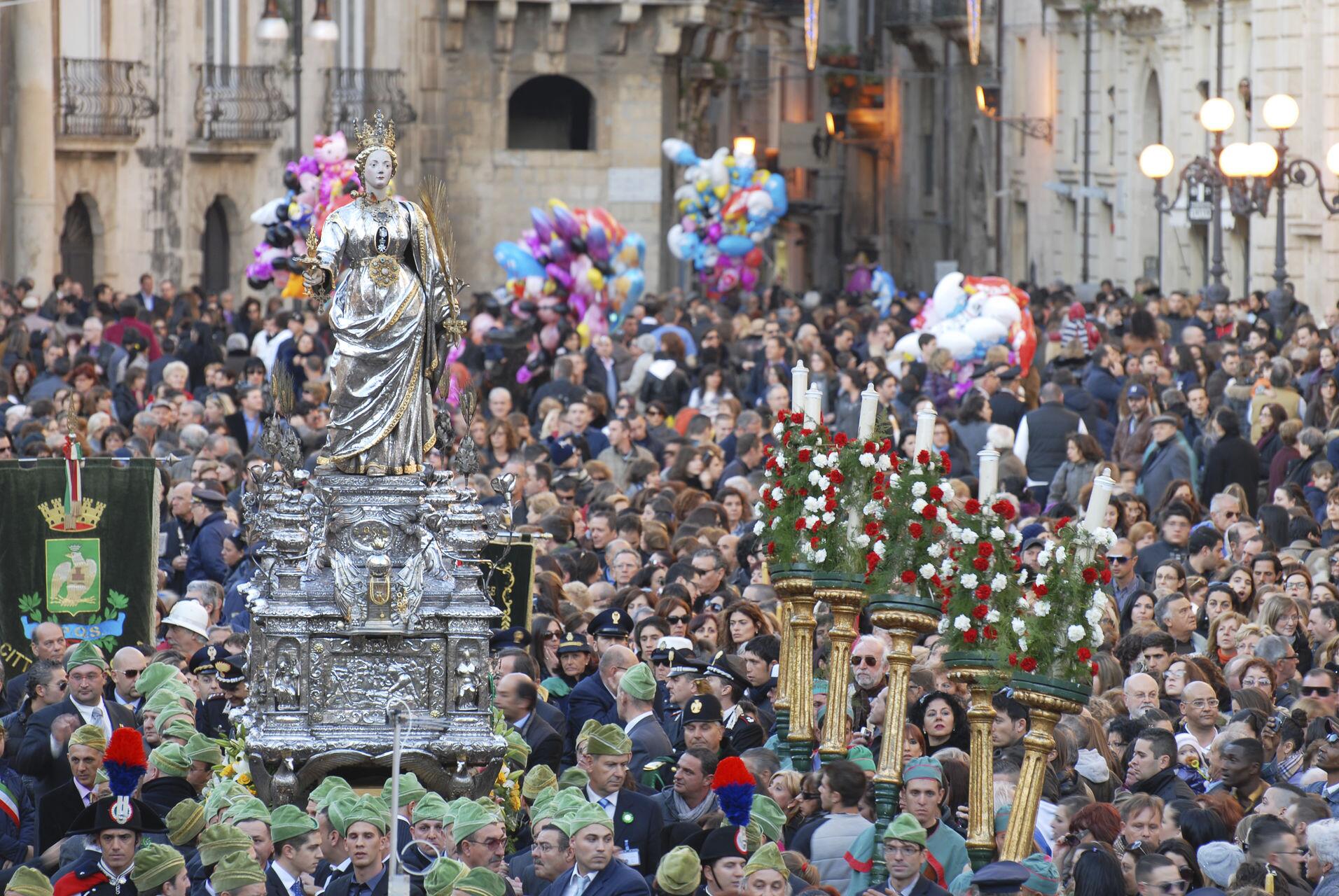
The Festa di Santa Lucia in Syracuse. Caravaggio's painting of her burial is in the church that bears her name on Ortigia.
The 17th century - chiaroscura and the plague
A man on the run
The fugitive Michelangelo Merisi, aka Caravaggio, arrived in Sicily in 1608.
Travelling around the island, from Syracuse to Messina and on to Palermo, he produced four masterpieces:
- the Seppellimento di Santa Lucia (Burial of St Lucy), Syracuse's patron (still viewable in the Basilica di Santa Lucia in Syracuse);
- the Resurrezione di Lazzaro (Raising of Lazarus - in Messina's Regional Museum);
- the Adorazione dei Pastori (Adoration of the Shepherds - also in Messina's Regional Museum)
- the Natività con Santi Lorenzo e Francesco (Nativity with Saints Francis Lawrence), which was stolen from Oratorio di San Lorenzo in Palermo in 1969. The painting's fate remains a mystery.
While in Syracuse, Caravaggio visited the towering limestone cave in the quarries of the Neapolis Archaeological Park and gave it a name that still endures today: the Ear of Dionysius.
The plague, the saint and the Dutch genius
Some 16 years after Caravaggio's time in Sicily, another artistic genius, Anthony van Dyck, arrived in Palermo.
The timing was not auspicious as the great plague of 1624 was soon to decimate the city's population. Seizing the moment, he set about creating a renowned series of paintings dedicated to Santa Rosalia, the city's beloved patron saint whose intervention put and end to the plague and saved thousands of lives.
The paintings can be seen in various galleries around the world including at the MOMA in New York, the Prado in Madrid, and Apsley House in London.



We're Villa Matchmakers
Because our local experts have personally visited each of our destinations, we know exactly what makes them special. Tell us what your ultimate villa holiday looks like, and allow us take care of the rest.